
TERMINAL BLOCKS
THE BEST INVENTION FOR YOUR CONNECTION: THE TERMINAL BLOCK.


PORTFOLIO EVOLUTION –
PROVEN SERIES STILL AVAILABLE TO ORDER
The following product series will be replaced by a modernized solution as part of our portfolio development. You can find all information on the changeover, availability, successor products, and transition phase here:
LIVE WEBINAR: EFFICIENT CONTROL CABINET PROCESSES WITH SELOS TERMINAL BLOCKS
In this live webinar, you´ll learn how to implement seamless processes with selos terminal blocks from digital planning to finished wiring, including practical optimization approaches for your control cabinet manufacturing.
Available Live Dates
German:
13 April 2026 | 3:00–4:00 PM
29 April 2026 | 10:30–11:30 AM
English:
13 April 2026 | 1:00–2:00 PM
29 April 2026 | 9:00–10:00 AM
All times in CEST


LOOKING FOR A CONNECTION?
CONNECTION TECHNOLOGIES FOR TERMINAL BLOCKS
SELOS NEW GENERATION — SYSTEM OVERVIEW
The new generation of terminal blocks combines push-in and screw connection technologies with a seamless digital workflow. From planning and configuration to the finished terminal assembly, you benefit from faster installation, greater flexibility, and reduced risk of errors.
In this video, get a compact overview of the technology, applications, and system advantages.






SELOS WTPN
TERMINAL BLOCKS WITH
PUSH-IN CONNECTION
The terminal blocks of the WTPN series rely on modern PUSH-IN technology and enable tool-free, time-saving wiring. Thanks to high contact forces, they ensure vibration-resistant, durable, and maintenance-free connections—ideal for power distribution in the low-voltage range of a wide variety of industrial applications.
- Vibration-resistant design for maximum operational safety
- Maintenance-free – no retightening required, reduced downtime
- Lightning-fast installation thanks to PUSH-IN connection technology

SELOS WTN
TERMINAL BLOCKS WITH
SCREW CONNECTION
The new screw terminal blocks are true all-rounders among terminal blocks. Thanks to their easy handling, the proven cage clamp connection is a universally applicable solution for all conductor types—and is widely used worldwide.
- Maximum flexibility in conductor selection – with or without ferrules
- Reliable hold, even under extreme mechanical loads
- Proven worldwide – used millions of times
IN ORDER: TERMINAL BLOCKS AT A GLANCE
Here you will systematically find the right terminal blocks for your top hat rail: All Wieland terminal blocks, clearly listed by nominal cross section, connection technology, and type.


FEED-THROUGH TERMINAL BLOCKS
Reliable connection of conductors – in Push-in (WTPN) or screw version (WTN).

MULTI-CONDUCTOR TERMINAL BLOCKS
Efficient wiring of multiple conductors in one of the terminals – for flexible circuit configurations.
FUNCTION TERMINAL BLOCKS
For extended applications such as diode, resistor, or isolating functions.

FUSE TERMINAL BLOCKS
Simple protection of circuits with pluggable fuse inserts.

GROUND TERMINAL BLOCKS
Safe grounding – with automatic PE connection when snapping onto the mounting rail.
TERMINAL BLOCKS WITH RING LUG CONNECTION
For conductors with ring or fork cable lugs – robust connection technology for high currents.
HIGH-CURRENT TERMINAL BLOCKS
High-performance connections for cross-sections up to 240 mm² – ideal for power distribution.

KNIFE EDGE DISCONNECT TERMINAL BLOCKS
Ideal for testing, measuring, and maintenance work thanks to integrated disconnect knives.

MULTI-TIER TERMINAL BLOCKS
Compact multi-tier terminal blocks for maximum wiring density in the smallest space.
MINI TERMINAL BLOCKS (TS 15)
Perfect for confined spaces and small distributors – can be mounted on TS 15 mounting rail.
PLUGGABLE TERMINAL BLOCKS
Pluggable variants for modular applications and quick interchangeability.
fasis WKFN, fasis WTP and selos WT
selos WTPN / selos WTN
Connection technology
Labeling systems
Other
Clamp types
Nominal cross-section
- Terminal blocks 1,5 mm²
- Terminal blocks 2,5 mm²
- Terminal blocks 4 mm²
- Terminal blocks 6 mm²
- Terminal blocks 10 mm²
- Terminal blocks 16 mm²
- Terminal blocks 35 mm²
- Terminal blocks 50 mm²
- Terminal blocks 70 mm²
- Terminal blocks 95 mm²
- Terminal blocks 120 mm²
- Terminal blocks 150 mm²
- Terminal blocks 185 mm²
- Terminal blocks 240 mm²
- Terminal blocks 300 mm²
TERMINAL BLOCKS ARE OUR FOUNDATION –
A MODERN ECOSYSTEM BUILDS ON IT

SIMPLIFY YOUR PLANNING WITH SELOS PLAN
Our intuitive planning tool selos PLAN optimizes every step of your configuration and project planning. With a product-based user interface, it offers a clear, visual representation of your DIN rail assembly.

MARKING MADE EASY WITH SELOS PRINT
Clean, clear, and precise marking is essential for a well-organized control cabinet. With our powerful marking system with selos PRINT, you can easily create marking labels for terminal block rows, tags, and cable markers for any application. Our new continuous marking system also makes the process more cost-effective.

COMPLETE YOUR STRUCTURE WITH SMART ACCESSORIES
From partition plates to test plugs – our extensive accessories portfolio provides everything you need for the complete structure of your terminal strips. All components are designed for compatibility and ease of use, ensuring a tidy structure, reliable power, and simplified maintenance throughout the entire product lifecycle.
TERMINAL BLOCKS FOR EVERY APPLICATION
– INDUSTRY-PROVEN AND SCALABLE
Ready for any control cabinet
Whether in mechanical engineering, intralogistics, power engineering, or building technology – Wieland terminal blocks are known across the industry for enabling structured, safe, and scalable wiring in the control cabinet.
From power distribution to sensor and actuator wiring: Our solutions adapt precisely to your application requirements – with screw, spring force, or Push-in technology as well as a digitally enabled accessories ecosystem.


INTRALOGISTICS
Reliable signal transmission in movement-intensive environments.
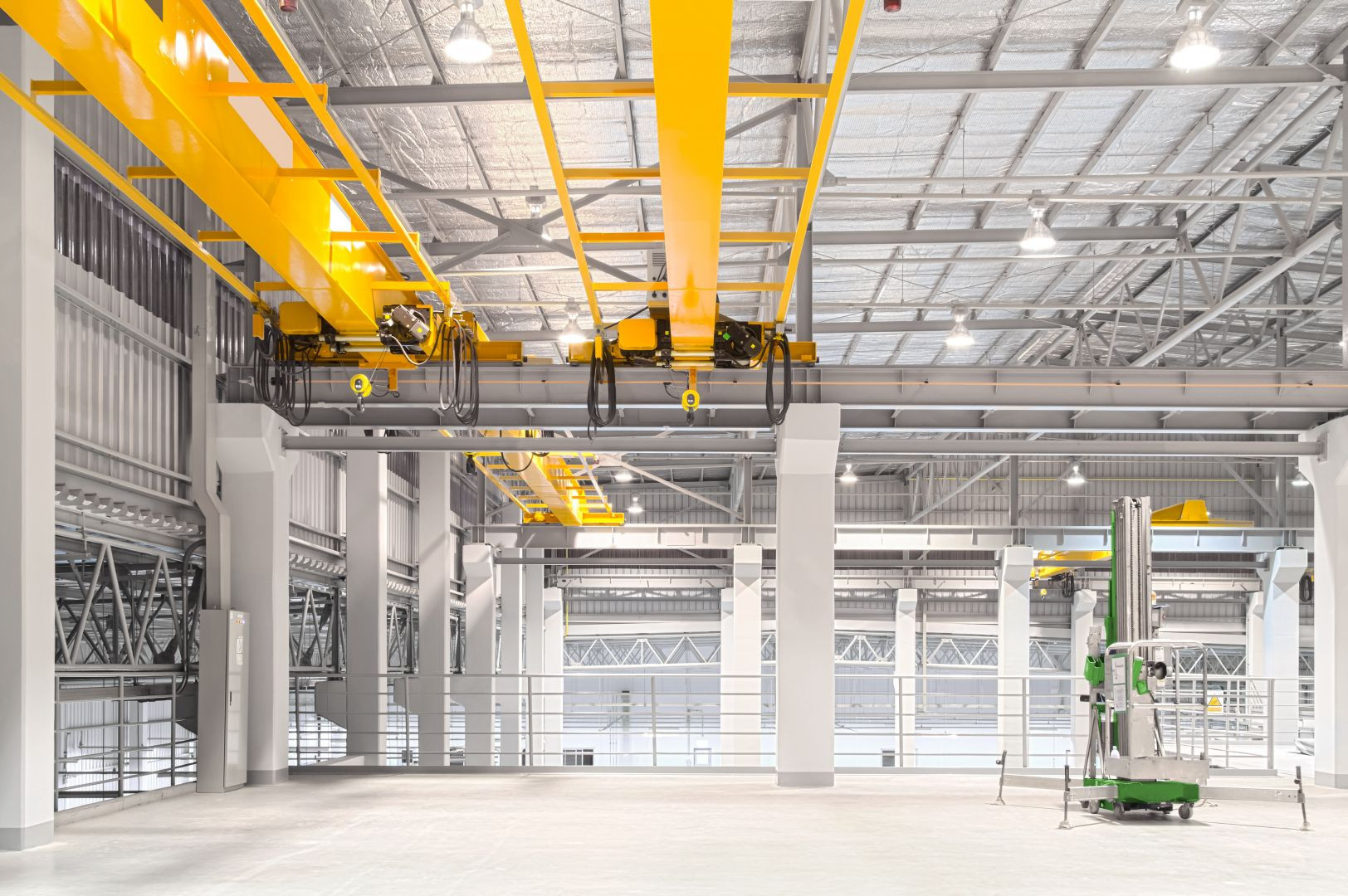
In intralogistics systems – e.g., overhead conveyors or crane systems – fast and secure signal transmission between the control cabinet and field devices is crucial. This is especially true with continuous movement, limited installation space, and regular vibrations. DIN rail terminal blocks ensure reliable and maintenance-free connections.
Typical application
- Signal transmission between the control cabinet and components of the crane system
- Use in moving systems with frequent mechanical stress
- Wiring in limited installation space in compact control cabinets
Application-specific requirements
- Dynamic vibrations during lifting or movement cycles
- Compact design of the electrical control cabinets in cranes or mobile units
- High demand for safe, low-maintenance connections
- Requirements for robust and space-saving terminal blocks
Your benefits at a glance
- Easy installation – short wiring times and intuitive connection technologies
- Maintenance-free – no retightening required, even in highly vibrating environments
- Space-saving – ideal for compact setups with high wiring density
PACKAGING MACHINE
Reliable signal transmission under demanding conditions.

In modern packaging machines, sensors and actuators must communicate smoothly with the control cabinet even with limited installation space and constant vibrations. DIN rail terminal blocks offer a compact and reliable solution for this.
Typical application
- Signal wiring between the control cabinet and field devices such as sensors and actuators
- Use in tight installation situations with high mechanical demands
Application-specific requirements
- Limited space in the control cabinet due to compact machine design
- Constant vibrations during operation require highly reliable electrical connections
- Need for space-saving, robust installation solutions
Your benefits at a glance
- Easy installation – optimized for fast wiring and commissioning
- Maintenance-free – long-lasting reliability without reinspection
- Vibration-resistant – ensures stable connections even under dynamic conditions
MACHINE TOOLS
Reliable performance in dynamic and high-load environments.

In CNC machines and other machine tools, signal connections must withstand strong vibrations and high electrical loads. DIN rail terminal blocks provide the necessary reliability and robustness for uninterrupted operation.
Typical application
- Connection and distribution of signals from electric drives and sensors
- Use in machine tools such as CNC centers
Application-specific requirements
- Constant vibrations during operation require a highly secure contact system
- Different CNC operating modes require connections that reliably handle high electrical loads
Your benefits at a glance
- Vibration-resistant – ideal for dynamic industrial environments
- High contact force – ensures stable connections under load
PHOTOVOLTAIC SYSTEMS
Reliable connection and distribution of power signals in the solar infrastructure.

In the control and junction boxes of photovoltaic systems, various string inverters, sensors, and monitoring devices must be wired efficiently and safely. Terminal blocks play a central role in distributing DC and AC power while also ensuring clear separation, labeling, and protection. A compact design and long-term reliability are especially critical for outdoor and remote installations.
Typical application
- DC and AC wiring between modules, inverters, and monitoring devices
- Use in outdoor control cabinets with limited space and increased thermal stress
Application-specific requirements
- Compact terminal blocks for panels exposed to sunlight and heat
- High connection reliability for DC and AC voltages at remote locations
- Need for labeling, disconnect, and protection accessories for safety and service
Your benefits at a glance
- Space-saving – compact construction for tight PV control cabinet layouts
- Durable & reliable – designed for harsh conditions with minimal maintenance
- Flexible configurations – optional accessories such as fuse holders and disconnects
INDUSTRIAL BUILDINGS
Efficient cabling for the distribution of power and signals in building control cabinets.

In industrial buildings, control cabinets often manage a mix of power distribution, lighting, building automation, and safety systems. Terminal blocks enable structured and scalable connections—from field wiring to distribution and automation levels.
Typical application
- Power and control wiring in building control cabinets
- Use in power distribution panels of halls, storage areas, and production sites
Application-specific requirements
- Clear separation of power, automation, and I/O signal wiring
- High channel and terminal density for scalable installations
- Easy labeling and good maintenance access for building technicians
Your benefits at a glance
- Modular and scalable – ideal for rapidly growing or segmented infrastructures
- Clear labeling – supports fast service and good traceability
- Robust – industrial quality for a long life cycle
HVAC SYSTEMS (HEATING, VENTILATION, AIR CONDITIONING)
Secure and space-saving power distribution for HVAC control cabinets.

HVAC systems require a structured electrical distribution for sensors, actuators, controllers, and fans. Control panels in equipment rooms or on rooftops require compact and maintenance-friendly solutions to ensure reliable climate control in commercial and industrial buildings.
Typical application
- Power and control wiring for heating, cooling, and ventilation systems
- Use in rooftop control cabinets, equipment rooms, or building distribution cabinets
Application-specific requirements
- Compact design due to limited installation space in HVAC enclosures
- Maintenance-free wiring to avoid service-related outages
- Flexible wiring paths for fans, valves, sensors, and communications devices
Your benefits at a glance
- Compact & flexible – optimized for tight HVAC control cabinet layouts
- Tool-free installation – reduces wiring time and service costs
- Reliable operation – even under thermal cycles and vibrations
Terminal blocks are electromechanical components used in control cabinets or circuit distribution panels to connect wires, cores, and cables in a detachable and safe manner. When clamped, they distribute power or electrical signals within the control cabinet via a lead.
Terminal blocks are mounted side by side on DIN rails and installed in the control cabinet. Incoming and outgoing conductors from other electrical components or devices are connected to the terminals of the terminal blocks, integrating them into a complex overall system. The essential task of terminal blocks in electrical engineering is to connect electrical conductors and, for example, to control or monitor building installations, power engineering, machines, and systems.
Terminal blocks are used for the connection of conductors at junctions of power and control circuits in power distribution or for the signal distribution of sensors and actuators. The blocks are typically used in control cabinets, where they are mounted on terminal or DIN rails.
They are differentiated as follows:
- Terminal blocks with small nominal cross section (1.5 mm² and 2.5 mm²), primarily used for sensor signal distribution.
- Terminal blocks with a nominal cross section of 4 mm² or 6 mm²; they are mostly used as terminal blocks for actuators such as pneumatic cylinders, electric motors, and similar.
- Terminal blocks with a nominal cross section of 10 mm² and more are often used for power distribution at higher voltage levels.
In principle, there is no universally applicable legal obligation in Germany to use terminal blocks. However, there are exceptions for special applications—such as the construction of electrical installations in fire-hazardous workplaces. According to DIN VDE 0105-100/A1, electrical installations must be repeatedly tested. An essential test aspect is the so-called insulation measurement, e.g., between neutral conductor and yellow/green conductor. For this measurement, it is necessary to disconnect the neutral conductor of each circuit. Therefore, DIN VDE 0100-718 and VdS 2033 require the use of N-disconnect terminal blocks in public facilities, commercial or industrial workplaces, and fire-hazardous workplaces.
How many terminal blocks you can place at most on a DIN rail (top hat rail) depends on terminal type, connection technology, and conductor cross-section. In practice, it is often neither sensible nor necessary to push the theoretically possible maximum number of terminal blocks on a terminal strip to the limit. A structured layout with sufficient clearances is better. This makes assembly and modification, maintenance, and inspection easiest, and keeps things clear in the control cabinet.